
Unseen
Order
Project Achievements
S.T.E.A.M Award and Invitation to Exhibition
Grade Achieved for Project (1:1)
What is Unseen Order
PROJECT OVERVIEW
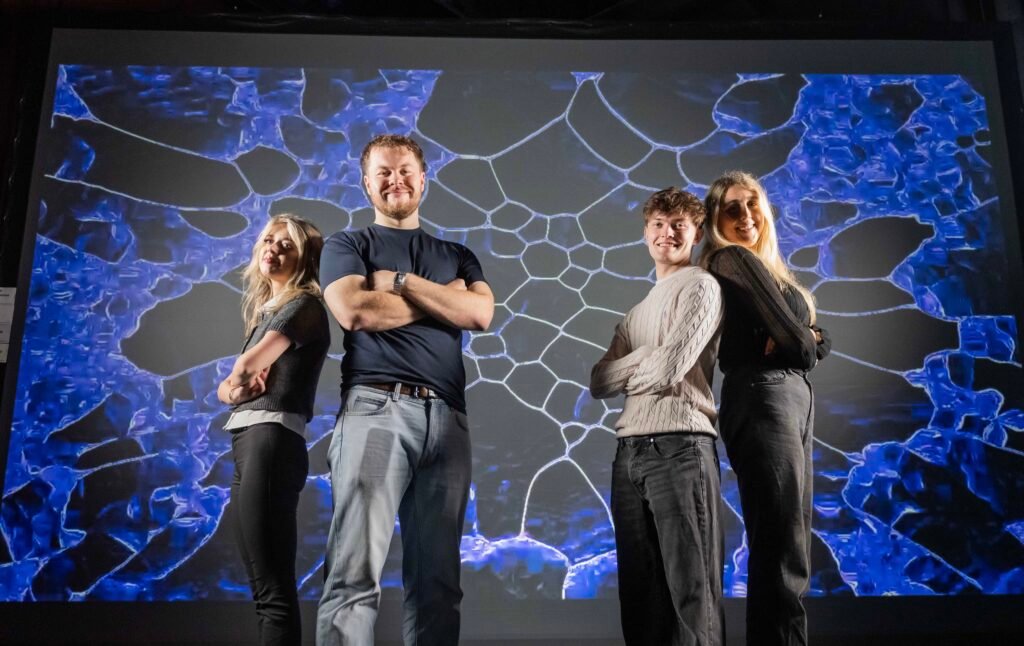
Unseen Order is a collaborative final year project developed as part of the Creative Digital Media programme at Munster Technological University.
The project was created as an interactive audio visual installation exploring how algorithmic systems shape human perception behaviour and identity. Working as Audio and Interactivity Designer within a team of four I was responsible for the technical systems that brought the installation to life including the audio reactive pipeline the interactive camera system and the core morphing engine built in TouchDesigner.
The work was exhibited at the MTU Crawford College of Art and Design Graduate Exhibition in Cork where it received the STEAM Award and was subsequently invited to exhibit at the STEAM Exhibition at MTU in November.
The Brief
Design and build an interactive audio visual installation that makes the invisible influence of algorithms visible to a live audience.
The installation had to function as a complete sensory experience combining projected visuals live audio reactivity and real time audience interaction. The technical systems had to be robust enough to run continuously in a live exhibition environment and compelling enough to hold an audience that had no prior context for what they were seeing.
My Role
This was a collaborative project and my responsibility was Audio and Interactivity Designer.
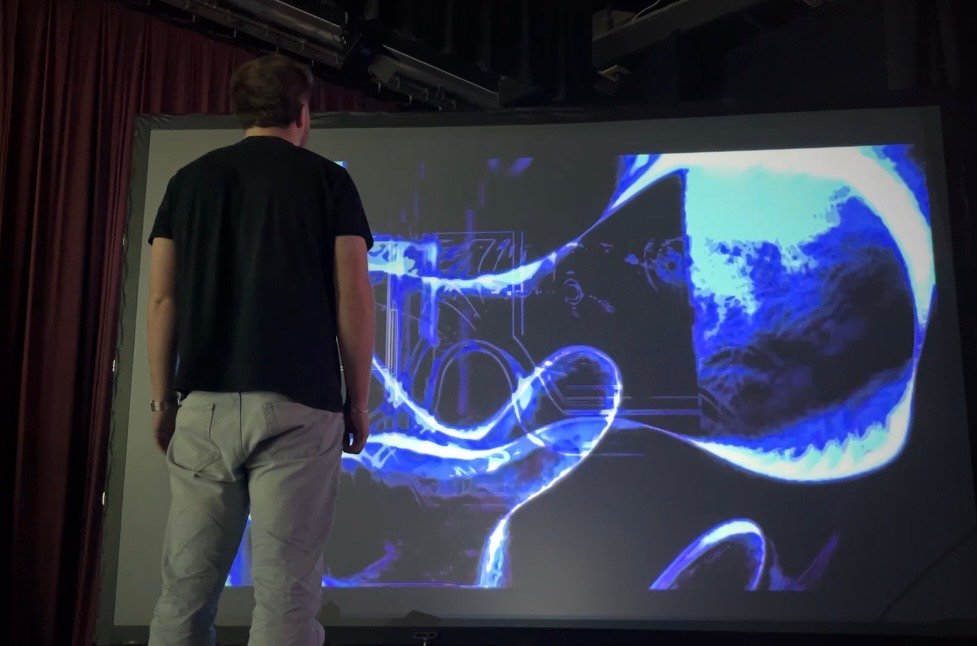
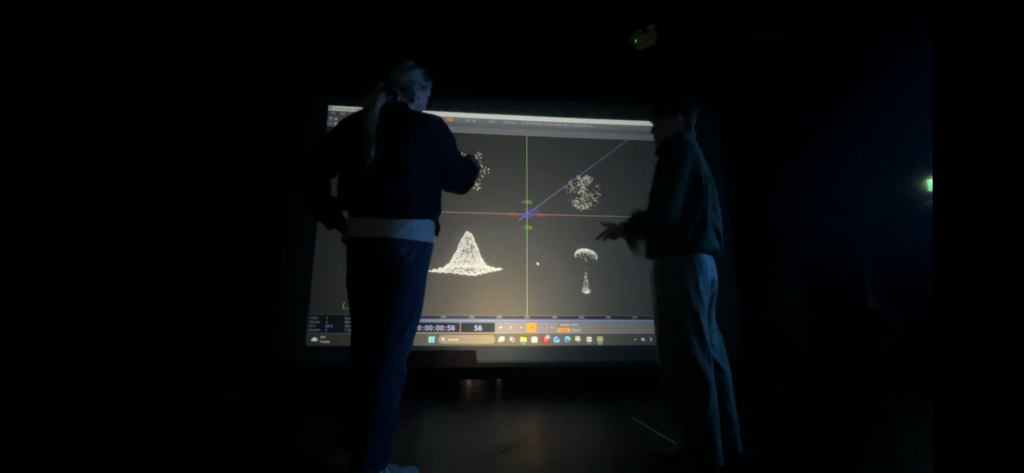
I built the audio reactive system that translated live sound into real time visual manipulation within TouchDesigner. I developed the interactive camera system using an Intel RealSense D455 depth sensing camera to track audience movement and trigger the morphing animation. I also resolved the core morphing pipeline after extensive experimentation with node systems ultimately standardising assets at 10000 points using a Sprinkle POP and TOP to POP workflow. I configured the projection mapping for both prototype and final exhibition using KantanMapper and integrated live Reddit API data to connect real time social media activity to the visual system.
How the project was built
Concept and Research
Unseen Order started with the idea that algorithms are everywhere but completely invisible and the project set out to change that.
The visual language was built around Jungian theory and the idea that the same mathematical structures found in nature are also the foundations of the digital systems shaping our lives.
Prototyping and Experimentation
A lot of the early work was about trying things that did not work and learning from them rather than following a fixed plan from the start.
Colour pacing shape language and motion were all tested repeatedly to figure out how the visuals could feel both organic and unsettling at the same time.
System Development
The core of the installation was a morphing pipeline built in TouchDesigner that transitioned between natural forms and their algorithmic counterparts with audio reactivity live Reddit data and a depth sensing camera all feeding into the experience.
Background visuals and a carefully mapped user journey tied everything together into something that felt cohesive rather than just technically impressive.
Exhibition and Outcome
The installation was tested with real audiences throughout development and the feedback shaped everything from the timing of the visuals to how people moved through the space.
It was exhibited at the MTU Crawford College Graduate Exhibition in Cork where it won the STEAM Award and was later invited to show at the STEAM Exhibition at MTU in November.
What I learned
Failure is Part of the Process
Every system that did not work narrowed the path to the one that did. The failed GLSL experiments were not wasted time they were the research.
Technical Complexity Needs a Conceptual Anchor
Building intricate systems in TouchDesigner only matters if the output serves the idea. The technology has to be invisible to the audience even when it is the hardest part of the work.
Parallel Workflows Prevent Bottlenecks
Developing audio and visuals sequentially meant audio was deprioritised when the morphing system ran over time. Building both streams simultaneously from the start produces a stronger result.